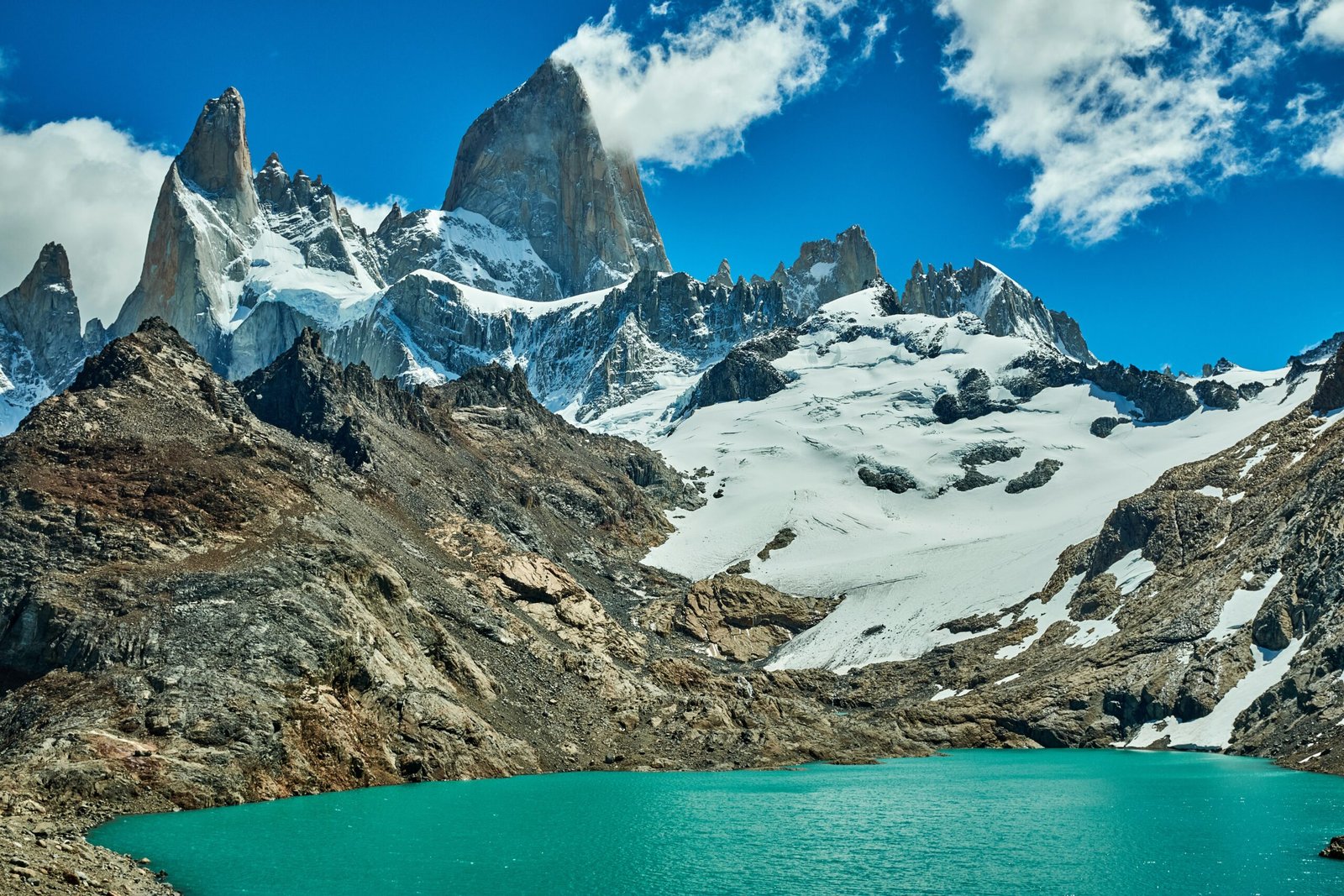
The W Trek is Patagonia's best-known walk. It takes its name from the shape of the route on a map: three valleys linked along the shores of the lakes in Torres del Paine National Park in southern Chile.
The three highlights
- Base of the Towers. A steep final climb over a boulder moraine to a glacial lake beneath the three granite towers that give the park its name.
- French Valley. A route into the heart of the Paine Massif, between hanging glaciers and sharp granite walls.
- Grey Glacier. The end of the Southern Patagonian Ice Field, seen from the lake shore or by boat.
Most groups walk the W in four or five days on the trail, with long days of five to ten hours. We grade our trip 4 on the Kineo Effort Scale.
Where you sleep
Inside the park, you sleep in mountain refugios or at campsites run by the park's concessionaires. Refugios have shared dormitories, hot showers and set meals. Campsites have tents set up on platforms or ground pitches, with meals served in the refugio.
Space is limited and booked well ahead, especially for refugio beds. Our trips are arranged with a local partner on a request basis, so the earlier you book, the better the chance of beds rather than tents.
Patagonian weather
The park is known for wind. Gusts can be strong enough to stop you in your tracks, especially on open sections near the lakes. Weather also changes quickly: sun, rain and even sleet can arrive in the same afternoon. Guides plan the day around conditions and may change the order of the route.
- Layers work better than one heavy jacket.
- Waterproof jacket and trousers are essential.
- Trekking poles help on windy and steep sections.
- Sunglasses and sun protection matter even on cool days.
When to go
The trekking season runs from about October to April, during the southern spring and summer. December to February brings the longest days and the most visitors. October, November, March and April are quieter, with cooler temperatures.
See our Torres del Paine W Trek page for the itinerary.